
Solder Mask, can its color influence the product's performance?
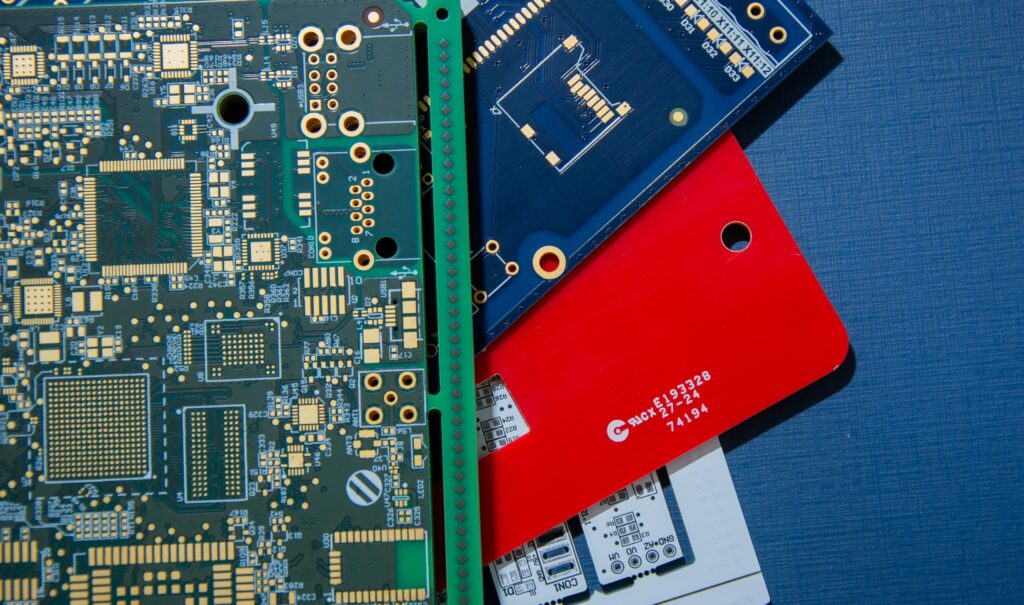
Green, blue, black, red or white. What's your favorite color?
The most common color on printed circuit boards is green, and there is no intrinsic reason for this. Shortly after World War II, with the invention of immersion soldering, there was a radical change in the way circuits were assembled and what we now call the printed circuit board was created. With it came the need to protect the terminals to prevent the solder from invading the islands during the soldering process, generating a short between them. In addition to this, another function for the mask is to shield the conductive elements from damage caused by external agents, such as humidity.
Since then, the use of the green color has become the standard, and it has remained so to this day, with the majority of PCBs being manufactured in this color. The choice of a different color from the conventional one typically occurs in situations such as when the customer wants to visually distinguish their boards on the assembly line, when the product will have the printed circuit board exposed and the predominant color affects the final product’s appearance, or simply when the intention is to stand out from the standard. However, when it comes to LED lighting projects, the color of the solder mask applied to the PCB surface becomes a functional aspect rather than just an aesthetic one.
White Solder mask
When the LED emits light, part of it strikes the surface of the PCB. In this case, to ensure that a portion of the light is reflected, a white solder mask is used. In LED lighting projects (as specified by the customer), Circuibras uses the highest-quality materials available on the market. This includes a photoimageable ink with a high reflectance index, low discoloration under high temperatures, and excellent surface coverage.
If you would like to know more, please contact us.
engenharia@circuibras.com.br